
Israel & the Middle East
Updated: Jul 15
One of these states is not like the others. But that doesn’t mean that it doesn’t belong.
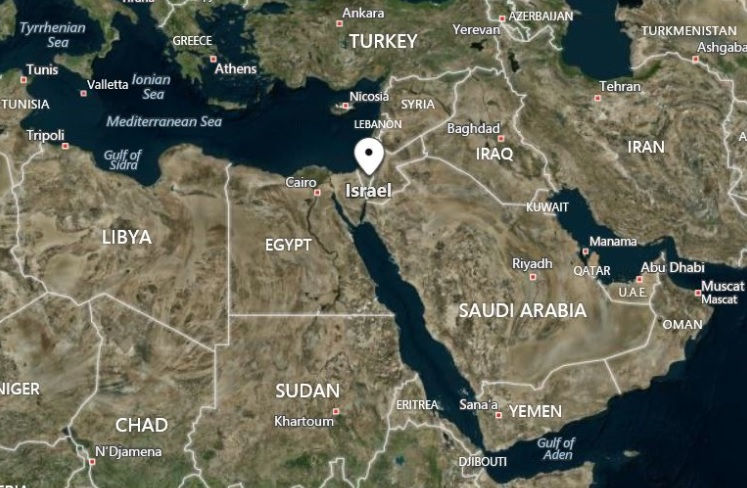
Let’s face it, Israel is an anomaly—and not just in the Middle East. For starters, it’s the only sovereign state in the world in which Jewish citizens are the vast majority, making up about 75% of the country’s population. The next largest concentration of Jews in any country by percentage is in Gibraltar where the 600 Jewish citizens make up nearly 2% of the overall population. The USA has the largest number of Jewish citizens outside of Israel who make up about 1.7% of the overall American population. Many diaspora Jews report a strange feeling upon arriving in Israel for the first time: being in the majority.
Within the context of the wider Middle East, Israel’s anomaly status stems not only from being bordered by nations whose populations run between 89% to 97% Muslim (excluding Lebanon, another Mideast anomaly, which is 55% Muslim), but also because of its western orientation, democratic institutions, free press, successful free-market economy and general liberalism, not to mention its ability to thrive in what is often a harsh and hostile region.
Being different is not always easy as it often draws a critical spotlight. Some take issue with the Jewish nature of the Israeli population, mistakenly assuming it to be homogeneous although Israeli Jews are ethnically diverse, hailing from over 150 distinct countries, representing numerous cultures and languages aplenty. Others have difficulty understanding how a country with a Jewish majority can be democratic or not innately discriminatory, when in fact almost all nations—democracies included—are dominated by one religion or ethnicity, or both. For example, in the United States over 78% of the population is Christian, in India 79% of the population is Hindu, in Turkey 98% Muslim, Iceland 95% Christian, while countries as diverse as Argentina, Italy, Denmark and Switzerland all boast populations that are well over 80% Christian.
Another aspect that makes Israel unique in the annals of world history is that this modern country is located in the same land (Israel), inhabited by the same people (Jews), who speak the same language (Hebrew), and practice the same religion (Judaism) as their ancestors did for well over 1200 years prior to being forcibly exiled from the land by the Roman conquerors early in the Common Era. In its May 15, 1948 edition, even the New York Times marveled that the “first Hebrew nation in 2000 years had been proclaimed” in Tel Aviv. Not a run-of-the-mill news story.
The only “Jewish state” in the world is alternatively considered a modern wonder by her friends or an annoying aberration by her foes. Israelis feel this tension daily as they debate Israel’s role in the region and in the world. They are keenly appreciative of the country’s supporters the world over, but ever vigilant of those in the region who are not. When it comes to peacemaking efforts with those foes, it would not be a stretch to say that for some Israeli leaders peacemaking addresses a deep psychological need to gain acceptance in the region. But those efforts, however commendable, can backfire. This may explain why some far-reaching Israeli efforts at peacemaking have resulted in costly wars while—paradoxically—in the absence of an active peace process, years can pass in relative calm.
Attaining peace has been a goal of Israel from the outset, and that goal is even enshrined the Declaration of Independence. Achieving it, however, continues to be a long and arduous process that has included both remarkable successes and tragic failures.
Peacemaking Efforts – A Timeline
Only after vicious and painful wars in 1948, 1956, 1967 and 1973 did Egypt sue for peace. Syria, under father Hafez Assad and also under son Bashar, never show a willingness to seriously address Israeli security concerns even before that country was wrecked and dismembered by a bloody and brutal civil war that is only now drawing to an end. The Oslo process of the early 1990’s was supposed to pay a "peace dividend" of Arab countries normalizing relations with Israel. Only Jordan fully took advantage of the opportunity before Oslo disintegrated. Despite limited successes, making peace and the managing the peace process are the focus of much campaign rhetoric on both sides of the political spectrum. The following are key milestones in the peace process, each of which have left legacies that reverberate in the current election campaign.
"Searching for peace in the Middle East is like a blind man in dark room looking for a black cat that is not there." - Israeli Professor and Political Analyst Dan Shueftan
November 1977 - Egyptian President Anwar Sadat Visits Israel
One courageous act—that of an Arab head of state visiting Israel and addressing the Knesset— ended over 30 years of warfare. The Egyptian-Israeli peace agreement was ultimately signed on March 26, 1979 at the White House between Egyptian President Anwar Sadat and Likud Prime Minister Menachem Begin with US President Jimmy Carter looking on. In return for peace, the agreement stipulated that "Israel will withdraw all its armed forces and civilians from the Sinai," captured from Egypt in the 1967 Six-Day War.
Accordingly, Begin instructed then Defense Minister Ariel Sharon to evacuate civilians and dismantle the Israeli communities established in the Sinai during Israel's rule. Neither Begin nor Sharon particularly wanted Israel's willingness to relinquish the territory and uproot settlements to serve as a precedent for future agreements. Yet, this broad implementation of the concept of "land for peace" most definitely registered in the Israeli public’s consciousness as well as in the capitals of the nations vanquished in the same short war.
October 1991 - The Madrid Peace Conference
Following US President George Bush Sr.'s success in driving Iraq out of Kuwait in the 1991 Gulf War, the US convened a peace conference in Madrid which inaugurated direct peace talks between Israel and her immediate Arab neighbors for the first time in history. The conference spawned bilateral negotiations between Israel and Syria, Lebanon, Jordan and the Palestinians, as well as multilateral talks on key regional issues. While the talks with the three Arab states were aimed at achieving peace treaties, the negotiations between Israel and the Palestinians were based on a two-stage formula: 5-year interim self-government arrangements, to be followed by negotiations on the permanent status issues. These negotiations have help bring about a peace treaty between Israel and Jordan, and a series of interim agreements with the Palestinians.
September 1993 - Israel - PLO Mutual Recognition
Like Sadat's visit, mutual recognition between Israel and the Palestine Liberation Organization (PLO) was an unimaginable act that jolted Israel and sent shockwaves throughout the world. Following intense behind-the-scenes contacts between Israeli and Palestinian negotiators in Oslo, an agreement was achieved between then Foreign Minister Shimon Peres and PLO Chairman Yasser Arafat. On September 9, 1993, Chairman Arafat sent a letter to Prime Minister Rabin, in which he stated unequivocally that the PLO:
• Recognizes the right of Israel to exist in peace and security;
• Accepts UN Security Council Resolutions 242 and 338;
• Commits itself to a peaceful resolution of the conflict;
• Renounces the use of terrorism and other acts of violence;
• Assumes responsibility over all PLO elements to ensure their compliance, prevent violations, and discipline violators;
• Affirms that those articles of the PLO Covenant which deny Israel's right to exist are now inoperative and no longer valid;
• Undertakes to submit to the Palestinian National Council for formal approval the necessary changes to the Covenant.
The Oslo Accords, as the Israeli-Palestinian interim agreements are known, failed to deliver peace. Although explanations abound, from the Israeli perspective, the primary reasons cited for its collapse are the Palestinian insistence on a "right of return" coupled with intensification of Palestinian terror throughout the entire period. Both are viewed as fundamental breeches of the agreement inasmuch as the former would undermine Israel's democracy and Jewish character and the latter Israel’s right to live in peace.
October 1994 - Peace with Jordan
For a change, this peace agreement came as no real surprise. Jordan and Israel had discreet ties for years after the Six-Day War. Aside from sharing a long border, Israel and Jordan both wanted to afford the Palestinian population in both countries relative freedom of movement. Even though technically at war, Israel and Jordan maintained an "open bridges" policy allowing people and goods across the border. Although this peace agreement is viewed as an achievement of the Madrid framework, it was implemented only after the Oslo Accords were operable. Despite some ups and downs in the years since the agreement, peace between Israel and Jordan has proven to be a positive development for both countries. While anti-Israel sentiment still exists in Jordanian society, business ties and government cooperation have generally been maintained.
Camp David Summit – July 2000
Israeli Prime Minister Ehud Barak's rose to power in 1999 by emphasizing his experience as the Chief of Army Staff and Defense Minister as well as being Israel’s most decorated soldier. He immediately put his keen intellect and formidable bravery to the test by attempting to fully resolve the conflict with the Palestinians. With US President Bill Clinton still in office and Yasser Arafat of the PLO still leading his people, Barak felt the circumstances were ripe to make a deal.
In the Summer of 2000, Clinton invited Barak and Arafat to a summit in Camp David. Barak offered Arafat a Palestinian state in 100% of Gaza and the over 90% of West Bank (with land swaps for those area that included Jewish settlements that would not be removed due to security or other reasons) that would have Jerusalem as the capital with the Palestinian ruling the Old City’s Muslim and Christian quarters along with the Temple Mount.
According the former US President Bill Clinton, Arafat, without bothering to make a counter offer, rejected Barak’s proposals. The Palestinian leader, he lamented could “never said yes.”
By February 2001, Barak was out of office, replaced by Ariel Sharon who was tasked to beat back waves of terrorism cynically unleashed by Arafat following the Camp David’s failure.
April 2003 - The Road Map to Peace
The “performance-based” Road Map, sponsored by the “Quartet” (the US, the UN, the EU and Russia) was hailed as the last step that would lead to peace between Israel and the Arabs by 2005. The basic premise of the plan was that a two-state solution could come about when Palestinian terror ended and when the Palestinian leadership began acting decisively against it and towards building a practicing democracy based on tolerance and liberty. Both sides were to make a clear, unambiguous statement to their peoples about the goal of a negotiated settlement. However, as a performance-based plan, progress was dependent upon the good faith efforts of the parties, and their compliance with the obligations outlined in the plan. The Palestinian Authority, however, failed to uproot terrorism and the plan never moved forward.
Disengagement Plan – 2005
With the Road Map stalled, Israel floated the idea of the “Disengagement Plan” in December of 2003. Since he was not getting cooperation in fighting terror from the Palestinian leadership, Prime Minister Ariel Sharon decided to take unilateral actions that would both address Israel’s security concerns and demographic needs—and provide an unprecedented opportunity for Palestinians seeking to rule themselves.
Sharon’s proposed to disengage from the Gaza Strip—i.e., actively evict some 8000 Israeli residents living there and physically dismantle their communities—as well as from part of the northern West Bank. The plan was implemented the plan in full by August 2005. Unfortunately, what could have been a positive turning point in Israel-Palestinian relations morphed into a dangerous quagmire. Instead of building the confidence of the Israeli public to cede more land by building a peaceful, independent Palestinian Gaza, the evacuated territory was and is used as a launching pad for terror attacks in the air, on the ground and beneath it as well. Unfortunately, Gaza is ruled exclusively by the Hamas terrorist organization and, as a result, Israel has been forced to fight three wars, resist frequent raids and counter innumerable violent protests to thwart their malevolent goals.
Annapolis Peace Conference
The Annapolis Conference was a Middle East peace conference held on November 27, 2007, at the United States Naval Academy in Annapolis, Maryland, United States. The conference marked the first time a two-state solution was articulated as the mutually agreed-upon outline for addressing the Israeli-Palestinian conflict.
The conference ended with the issuing of a joint statement from all parties, signed by Prime Minister Ehud Olmert on behalf of Israel, Mahmoud Abbas on behalf of the Palestinian Authority and George W. Bush on behalf of the U.S. The list of attendees included representatives from the Arab League, which was the first time a delegation from the Arab League was present at such a meeting.
September 2008 – Ehud Olmert’s Peace Offer
Over the course of his 3+ years as Prime Minister, Ehud Olmert met with President Mahmoud Abbas of the Palestinian Authority met nearly 40 times. In September 2008, Olmert offered what he later characterized as an opportunity that would not be offered by another prime minister for 50 years. Olmert, like Ehud Barak eight years before, felt he could coax the Palestinian leader into an agreement if he simply answered nearly all his stated demands. Since Gaza was already under Palestinian control, Olmert offered more of the West Bank than Barak did and even proposed to remove Israeli presence from the Jordan Valley, long considered a strategic geographical asset. As for Jerusalem, Olmert offered to cede Israeli control of the entire Old City of Jerusalem and place it under international auspices, an idea that no other Israeli leader had ever floated. Olmert’s offers went unanswered.
2008 Until the 2023
As one Israeli analyst one quipped, “Searching for peace in the Middle East is like a blind man in dark room looking for a black cat that is not there.” Despite its elusive nature, the idea of seeking peace in the Middle East is so strong that most leaders cannot fight its appeal. Nearly all US Presidents have tried their hand at making peace, including Barack Obama, Donald Trump, Joe Biden, and Donald Trump in his second term. But things got exponentially more complicated after the Hamas attack of October 7, 2023 and the ensuing war.
The Regionalization of Conflict and the Iranian Axis
The traditional, localized framework of the Israeli-Palestinian peace process has been fundamentally eclipsed by a broader regional struggle driven by Iran and its "Axis of Resistance." Over the last two decades, Tehran systematically filled the governance and security vacuums in the region, arming and financing proxy networks—including Hamas in Gaza, Hezbollah in Lebanon, and the Houthis in Yemen—to surround Israel with a ring of hostile military fronts. The culmination of this strategy on October 7, 2023, and the subsequent multi-front war, shattered any lingering illusions that peace could be achieved purely through localized negotiations with Palestinian leadership. Following direct, historic military confrontations between Israel and Iran involving massive missile and drone exchanges, the "land-for-peace" concept has been completely overtaken by an existential, regional zero-sum logic. True peace or stabilization is no longer viewed through the lens of a bilateral treaty, but rather as a high-stakes chess match dependent on neutralizing Iran's regional military footprint.
Domestic Political Fractures Inside Israel
Internally, the protracted nature of this wartime reality has aggravated deep, historic rifts within Israeli society, fundamentally altering the domestic political landscape. For years, the Israeli electorate debated the merits of conflict management versus a two-state solution, but the catastrophic intelligence and security failures of October 7 pushed these debates into an unprecedented crisis of trust. The country has become intensely polarized over wartime strategy, the prioritization of hostage negotiations versus the total eradication of Hamas, and the post-war vision for Gaza. Mass protests have regularly filled the streets of Tel Aviv and Jerusalem, reflecting deep societal anger toward Prime Minister Benjamin Netanyahu’s governing coalition. With the Knesset locking in the next general election for October 27, 2026, the entire upcoming campaign has effectively transformed into a high-stakes referendum on the national security failures of October 7 and the political survival of its longest-serving leader. This intense internal polarization leaves virtually no political space or domestic appetite for risky territorial concessions or traditional peace diplomacy.
The Collapse of the Peace Paradigm
Ultimately, the events since 2008—culminating in the current regional war—have rendered the older, legalistic disputes of the Oslo Accords entirely obsolete. Following the collapse of the 2008 Annapolis negotiations, the structural split between the West Bank's Palestinian Authority and Hamas in Gaza fractured any unified Palestinian representation. While the 2020 Abraham Accords briefly suggested that Israel could bypass the Palestinian issue by normalizing ties directly with pragmatic Arab states, the sheer scale of post-October 7 destruction has forced a chaotic, international scramble just to manage immediate security crises. Even with recent U.S.-brokered initiatives prompting Hamas to theoretically dissolve its civilian administration in favor of a technocratic "National Committee for the Administration of Gaza," the peace process remains entirely deadlocked on the ground. Deep mutual mistrust ensures that fundamental disputes over Israel's insistence on total demilitarization and ongoing security control inside Gaza remain entirely unresolved, replacing the dream of an enduring peace with the grim reality of permanent crisis management.Ultimately, the events since 2008—culminating in the current regional war—have rendered the older, legalistic disputes of the Oslo Accords entirely obsolete. Following the collapse of the 2008 Annapolis negotiations, the structural split between the West Bank's Palestinian Authority and Hamas in Gaza fractured any unified Palestinian representation. While the 2020 Abraham Accords briefly suggested that Israel could bypass the Palestinian issue by normalizing ties directly with pragmatic Arab states, the sheer scale of post-October 7 destruction has forced a chaotic, international scramble just to manage immediate security crises. Even with recent U.S.-brokered initiatives prompting Hamas to theoretically dissolve its civilian administration in favor of a technocratic "National Committee for the Administration of Gaza," the peace process remains entirely deadlocked on the ground. Deep mutual mistrust ensures that fundamental disputes over Israel's insistence on total demilitarization and ongoing security control inside Gaza remain entirely unresolved, replacing the dream of an enduring peace with the grim reality of permanent crisis management.
Political Parties and the Peace Process
All Israeli political parties are ardent supporters of the peace process—they just differ in how they wish to manage it and how they define 'peace.'
Even after October 7th, centrist and left of center parties maintain the belief that the best path to peace is through negotiations, but the question is: with who? The Palestinian Authority is seen as corrupt and unreliable; Hamas is, of course, out of the question for all but the most radical elements within politics. To a large degree, these parties remain committed to the land for peace model outlined in the Oslo Accords and would also take into account subsequent offers. Most are of the opinion that there will be no formalized relations between Israel and additional key Arab and majority Muslim nations -- primarily referring to Saudia Arabia -- until a final agreement between Israel and the Palestinians has been hammered out.
The Likud and parties on the right have a different view. They point to the fact that Arab nations in the Persian Gulf and even Muslim African nations have joined the Abraham Accords, and Lebanon has taken some brave steps toward normalization despite the IDF's presence and activity in southern Lebanon. Even before the "rounds" with Iran, Arab nations found shared interests with Israel in containing and countering Iran and the hope is that these interests will override reticence about relations with Israel. Over the years, it has been Netanyahu’s strident anti-Iran stance that has laid the foundations for this surprising and growing coalition of real and potential new friends in the region.
For these right of center parties, the Palestinian issue is more one to be managed than it is to be solved. In their opinion, there is simply too much distrust—and too many rejected offers—to continue along the same path that has proven over the course of decades to be less than fruitful.


Comments